When to Replace Sauna Stones: Signs, Frequency & Safety Tips
Sauna Assistant App
Remember when the stones need attention
Add inspections and replacements to the maintenance journal, alongside the session history that shows how often the heater is used.

$19.99 once. No subscription.
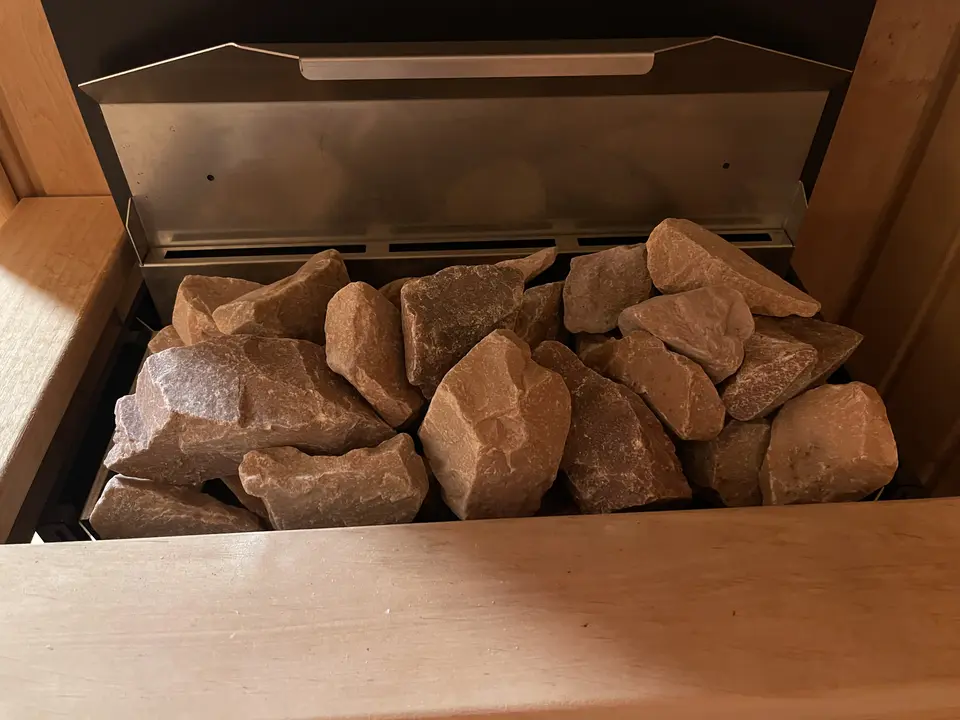
Sauna stones look like they should last forever — they’re rocks, after all. But the constant cycle of extreme heat, sudden cooling, and steam slowly destroys them from the inside out. Old, cracked stones make weaker steam, heat your sauna unevenly, and can quietly damage your heater. This guide covers exactly how long stones last, which types are worth buying, what replacement costs, and how to tell when it’s time.
In this guide
- Why sauna stones matter
- How long do sauna stones last?
- Which sauna stones are best?
- What it costs to replace sauna stones
- Signs you need new stones
- How to inspect your sauna stones
- How many stones do you need?
- Proper stone placement
- How to replace sauna stones, step by step
- Frequently asked questions (FAQ)
Why sauna stones matter
Sauna stones are the heart of your sauna. They store heat from your heater and release it slowly into the air. When you pour water on them, they flash it into the steam (löyly) that makes a sauna feel alive. The condition of your stones directly affects how soft or harsh that steam feels, how evenly the room heats, and how stable your humidity readings are.
They’re also worked harder than almost any rock in nature: heated to 300–400 °C, hit with water that turns to steam instantly, then cooled, over and over. No stone survives that indefinitely.
How long do sauna stones last?
There’s no single number, because lifespan depends on how often you use the sauna and which stones you bought. As a practical rule:
| Usage pattern | Stones near the elements | Top / decorative stones |
|---|---|---|
| Light (1–2 sessions/week) | Inspect yearly, replace ~every 2 years | Often 3+ years |
| Regular (3–4 sessions/week) | Replace yearly | ~2 years |
| Heavy (daily / commercial) | Check every 6 months, replace as needed | ~1 year |
The stones touching or closest to the heating elements always fail first — they take the most thermal shock. You rarely need to replace the whole pile at once. Often you just swap the bottom layer and keep the good ones on top.
Pro tip: Not sure how often you actually use your sauna? The Sauna Assistant app logs every session automatically, so “do I use this daily or weekly?” becomes a fact instead of a guess — and you’ll know exactly when a stone check is due.
Which sauna stones are best?
Good sauna stones share three traits: high density, low porosity, and a high tolerance for thermal shock. Igneous (volcanic) rock wins on all three. Here’s how the common options compare:
| Stone | Heat retention | Durability | Notes |
|---|---|---|---|
| Olivine diabase | Excellent | Very high | The most popular commercial choice. Dense, dark, holds heat well, ages slowly. |
| Peridotite / olivine | Excellent | Very high | Iron- and magnesium-rich igneous rock, extremely heat-tolerant. |
| Vulcanite | Very good | High | Dense volcanic stone, reliable all-rounder. |
| Gabbro | Very good | High | Coarse-grained, dense, slow to wear. |
| Raspberry / red quartzite | Good | High | Hard and very durable, popular as a decorative top layer; releases heat a touch slower than dark diabase. |
Split vs. rounded stones. Split (crushed) stones pack with air gaps and expose more surface area, giving faster, livelier steam. Smooth rounded stones allow better airflow but less surface contact. A mix of both works well — split lower down for steam, a few rounded or decorative stones on top.
What to avoid:
- River and beach rocks — they trap moisture inside. Heated, that water expands and the rock can explode. This is the single most common dangerous mistake.
- Pure quartz, granite with quartz veining — prone to cracking and shattering under thermal shock.
- Limestone, sandstone, other sedimentary rock — soft, crumbles fast, can release dust or odors.
- Concrete or ceramic substitutes — not designed for repeated 400 °C cycling.
If a stone isn’t sold specifically as a sauna stone, don’t put it on your heater.
What it costs to replace sauna stones
Replacement is cheap relative to a heater repair. Exact prices vary a lot by region and brand, but as a rough guide:
- A 15–20 kg box of olivine diabase typically runs roughly €15–40 / $20–50.
- Decorative quartzite usually costs a little more.
- A typical home electric heater needs one box; large wood-burning stoves can need several.
Compare that to a heater element burned out by stone dust, and a yearly refresh is the cheapest insurance you can buy for your sauna.
Signs you need new stones
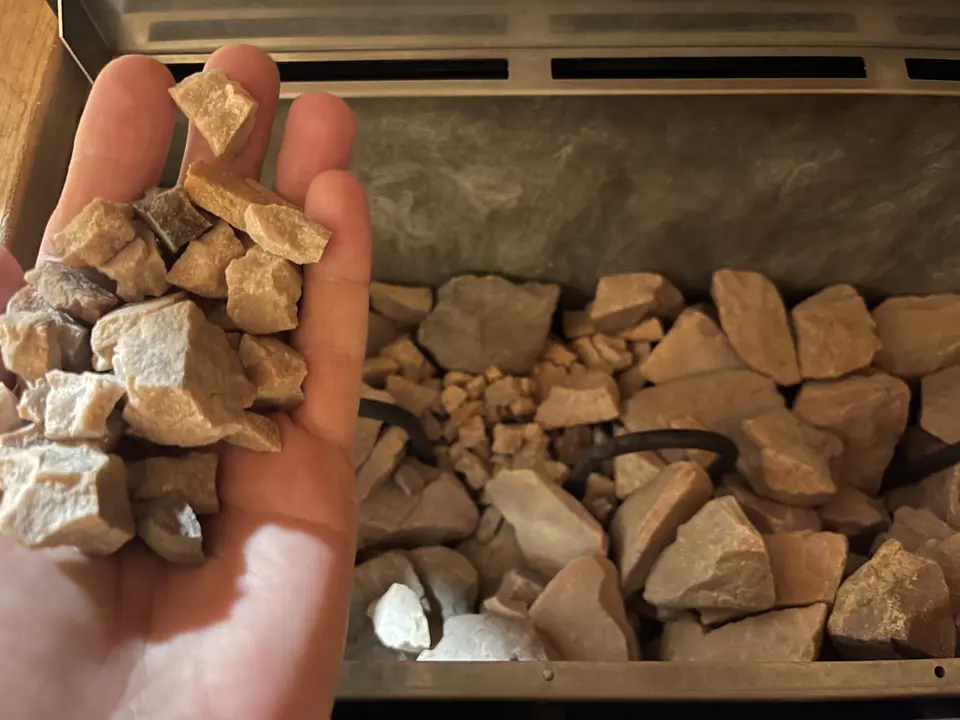 Broken and cracked sauna stones — raspberry quartzite
Replace stones promptly if you notice any of these:
- Visible cracks, splits, or crumbling edges
- Stones that feel unusually light when lifted (they’ve gone porous)
- White or gray powder forming on the surface or under the heater
- The sauna takes noticeably longer to reach temperature
- Uneven heat, or weak, short-lived steam from the same amount of water
- A chemical or “off” smell when the stove heats up
- You can see the metal heating elements through gaps
Any single one of these is enough reason to inspect the whole pile.
How to inspect your sauna stones
- Let the sauna cool completely — wait at least 24 hours after use.
- Remove all stones carefully and lay them out.
- Look for cracks, crumbling, porosity, and surface powder.
- Tap test: gently knock two stones together. Solid stones give a clear ring. Bad ones sound dull or break.
- Rinse the keepers with water to wash off accumulated dust before they go back.
A full inspection takes 15–20 minutes and should be on your maintenance calendar at least once a year.
How many stones do you need?
Always follow your heater’s manual first — manufacturers specify a fill weight. As a rough orientation, a home electric heater commonly holds around 10–20 kg of stones, while wood-burning stoves often take far more (20–60+ kg). The goal is to fully cover the elements while still leaving air gaps. Underfilling exposes elements; overpacking strangles airflow and weakens steam.
Proper stone placement
- Large stones on the bottom — they take direct heat and support the pile.
- Medium stones in the middle — they spread heat evenly.
- Smaller stones on top — they heat fast for instant steam.
- Don’t pack tightly — air must flow between stones.
- Cover the elements completely, but never force stones into tight gaps.
How to replace sauna stones, step by step
- Cool the sauna fully (24+ hours) and switch off / unplug the heater.
- Remove every stone and discard the cracked, light, or powdery ones.
- Vacuum or brush stone dust out of the heater basket — this protects the elements.
- Rinse new and reused stones to remove dust and grit; let them air-dry.
- Re-stack large to small, elements fully covered, with airflow gaps.
- Run an empty heat cycle with good ventilation before your first löyly to burn off any residue.
The bottom line
Taking care of your sauna stones keeps the sauna running well and saves real money on heater repairs. Inspect yearly, replace the lower stones when they show wear, and never use rocks that weren’t sold as sauna stones.
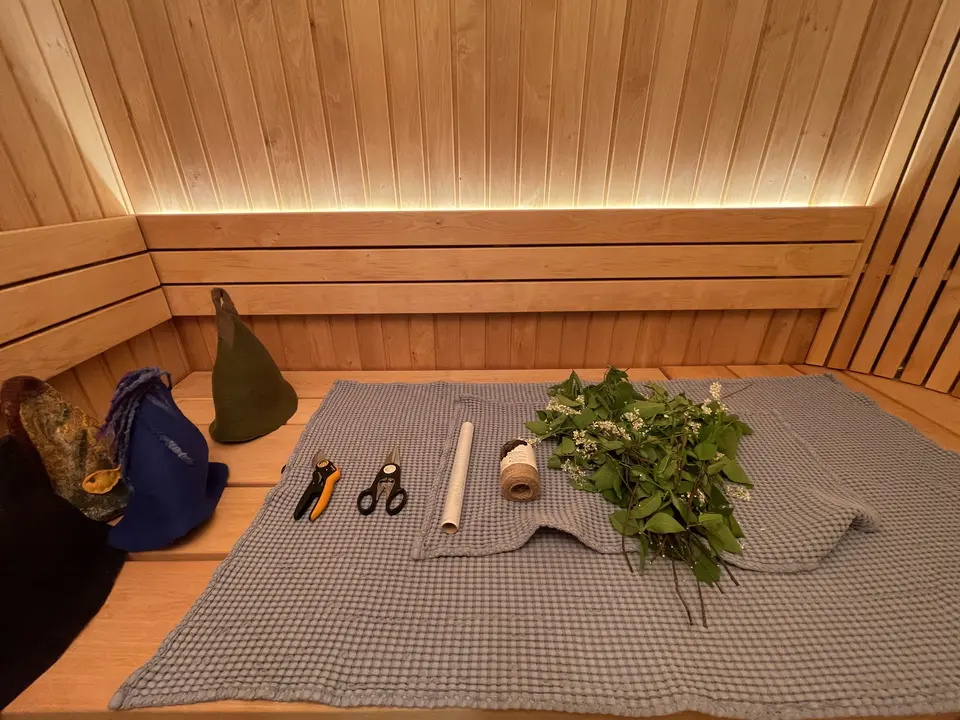
Healthy stones also make a noticeable difference when you’re using essential oil snowball infusions, creating steam for natural whisk aromas, or hosting Aufguss ceremonies — they need to release heat evenly for any of those to work properly. A well-stacked pile of fresh stones is also the single biggest step toward making an electric sauna feel wood-fired.
Frequently asked questions (FAQ)
How long do sauna stones last?
With regular use (3–4 sessions a week), plan to replace your sauna stones about once a year. With daily or commercial use, check them every six months. With light use they can last two years or more. The stones closest to the heating elements always wear out first, so you can often replace just the lower layer rather than the whole pile.
Can you wash and reuse sauna stones?
Yes. Stones that are still solid — no cracks, not crumbling, not gone light and porous — can be rinsed to remove dust and reused. Only discard stones that fail the tap test or show clear wear. Reusing good stones while replacing worn ones is normal practice.
What are the best sauna stones?
Dense igneous (volcanic) rock performs best: olivine diabase is the most popular, with peridotite, vulcanite, and gabbro also excellent. Raspberry quartzite is a hard, durable decorative option for the top layer. Avoid river rocks, quartz, and any soft sedimentary stone.
Why did my sauna stone explode?
Almost always because it trapped moisture. River and beach rocks (and other non-sauna stones) hold water inside tiny pores. When that water flashes to steam during heating, the pressure can crack or burst the stone. Use only stones sold specifically for saunas, which are dense and low-porosity.
How many sauna stones do I need?
Follow your heater manual’s specified fill weight. As a rough guide, home electric heaters typically take around 10–20 kg, and wood-burning stoves often 20–60 kg or more. Cover the elements fully while keeping air gaps between stones.